
Early Signs of Infertility in Women: What Every Woman Should Know

Trying to start a family is one of the most personal and emotional journeys a woman can take. But for millions of women worldwide, getting pregnant isn’t as straightforward as they expected. Infertility affects approximately 1 in 6 couples globally, and in many cases, the woman’s reproductive health plays a central role.
The good news? Your body often sends signals before you reach the point of struggling to conceive. Recognizing the early signs of infertility in women can empower you to take action sooner — whether that means lifestyle changes, medical evaluation, or exploring fertility treatments.
This guide walks you through the most important warning signs, what they mean, and when it’s time to consult a specialist.
Female infertility is defined as the inability to conceive after 12 months of regular, unprotected intercourse (or 6 months if you’re over 35). It can result from issues with ovulation, the uterus, fallopian tubes, hormones, or egg quality.
Infertility doesn’t always mean permanent inability to conceive. Many women go on to have successful pregnancies with the right treatment and support.
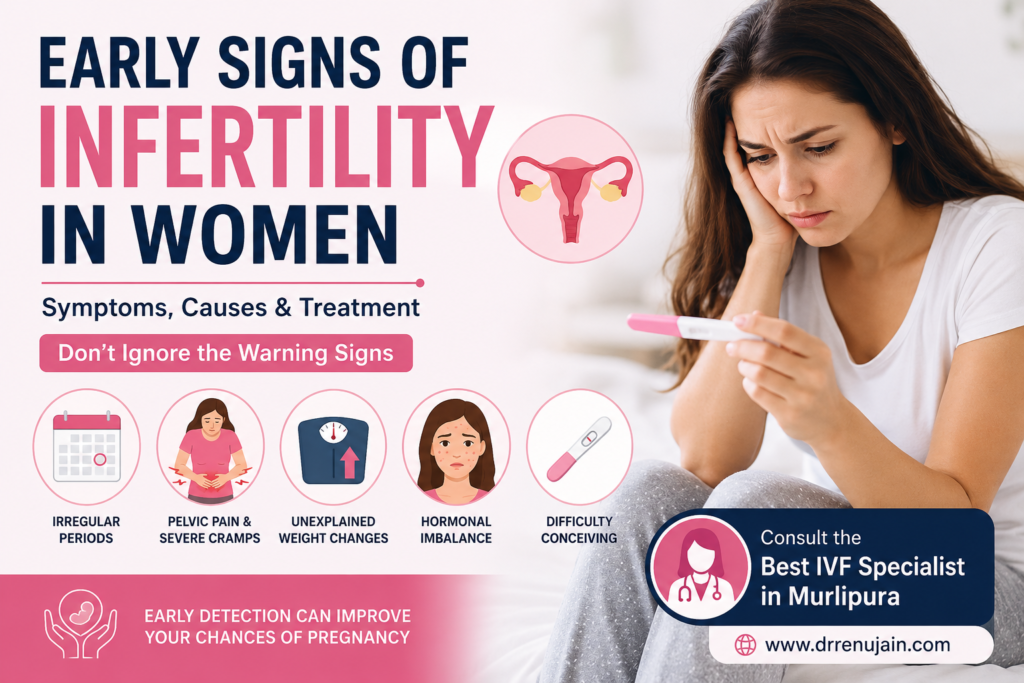
One of the most telling early signs of infertility in women is an irregular menstrual cycle. A normal cycle typically ranges from 21 to 35 days. If your periods are:
…your body may be signaling an underlying hormonal imbalance or ovulation problem. Irregular periods are often linked to conditions like PCOS (Polycystic Ovary Syndrome) or thyroid disorders — both of which are leading causes of female infertility.
While mild cramps are normal, severe menstrual pain that disrupts your daily life is not something to ignore. Debilitating pain, especially with heavy bleeding, can be a symptom of:
Endometriosis alone affects 10% of women of reproductive age and is one of the leading causes of infertility. Pain that keeps you from work, school, or regular activities warrants a medical evaluation.
Pay attention to how much you bleed during your period. Both extremes can signal a problem:
A healthy uterine lining is essential for a fertilized egg to implant and grow. Changes in flow that are new or worsening should be discussed with a gynecologist.
Ovulation is the cornerstone of fertility. Without releasing a healthy egg, conception is not possible. Signs that you may not be ovulating regularly include:
Ovulation predictor kits (OPKs) can help track whether or not you’re ovulating. If you consistently get negative results, it’s time to speak with a fertility expert.
Hormones regulate nearly every step of the reproductive process. When they’re out of balance, conception becomes difficult. Watch for symptoms such as:
These signs often point to conditions like PCOS, hyperprolactinemia (excess prolactin), or thyroid dysfunction — all of which affect fertility but are highly treatable when caught early.
Painful sex — known medically as dyspareunia — can be more than a physical discomfort. It may indicate:
Each of these conditions can interfere with fertility. If you experience consistent pain during or after intercourse, don’t normalize it. Speak with your doctor.
If you’ve been able to conceive but experience repeated pregnancy loss (two or more miscarriages), this is a significant early sign of infertility-related issues. Recurrent miscarriages may indicate:
This is a heartbreaking experience, but it’s also a clear signal to seek specialist help before trying again.
Unexplained discharge from the nipples — a condition called galactorrhea — when not pregnant or breastfeeding can indicate elevated levels of prolactin, a hormone that suppresses ovulation. High prolactin levels make it difficult to conceive and should be investigated through a simple blood test.
Ongoing pain in the pelvic region outside of menstruation is never “just normal.” Chronic pelvic pain can be linked to:
Untreated pelvic conditions can damage the fallopian tubes or ovaries over time, making early diagnosis critical.
Some STIs — particularly chlamydia and gonorrhea — can cause pelvic inflammatory disease (PID) if left untreated. PID can scar and block the fallopian tubes, making it difficult for eggs to travel to the uterus. Women with a history of STIs should inform their gynecologist, as early screening and treatment can prevent long-term fertility damage.
Beyond symptoms, certain lifestyle and medical factors can raise your risk:
| Risk Factor | How It Affects Fertility |
|---|---|
| Age (35+) | Egg quality and quantity decline significantly |
| Obesity or underweight | Disrupts hormone production and ovulation |
| Smoking | Damages eggs and accelerates menopause |
| Excessive alcohol | Affects hormonal balance and egg quality |
| Stress | Suppresses reproductive hormones |
| Autoimmune disorders | Can attack reproductive tissues |
| Previous pelvic surgeries | May cause scar tissue or adhesions |
If you’re under 35 and have been trying to conceive for 12 months without success — or under 35 but experiencing any of the symptoms listed above — it’s time to seek professional guidance. If you’re 35 or older, don’t wait a full year; consult a specialist after 6 months.
You should also seek help immediately if you have:
Early intervention dramatically improves outcomes. Modern fertility medicine offers a wide range of treatments — from simple hormonal therapy to advanced procedures like IVF (In Vitro Fertilization).
View this post on Instagram
A fertility specialist will typically begin with:
Armed with these results, your doctor can create a personalized treatment plan.
Treatment depends on the underlying cause but may include:
With advances in reproductive medicine, many women who once faced an infertility diagnosis have gone on to have healthy pregnancies.
If you’ve been experiencing any of the early signs of infertility in women described above, please know that you don’t have to navigate this alone. Early consultation with a qualified specialist can make all the difference.
For women in Rajasthan seeking expert fertility care, consider reaching out to the Best IVF Specialist in Murlipura — Dr. Renu Jain, a highly experienced reproductive medicine specialist dedicated to helping women achieve their dream of motherhood with personalized, compassionate care.
Q1. Can a woman have no symptoms and still be infertile?
Yes. Some causes of infertility — like blocked fallopian tubes or poor egg quality — have no obvious symptoms. That’s why regular gynecological check-ups are so important.
Q2. At what age does fertility start to decline?
Fertility begins to gradually decline in the late 20s and drops more sharply after age 35. By 40, fertility is significantly reduced.
Q3. Is infertility always permanent?
Not at all. Many causes of infertility are treatable. With the right diagnosis and treatment, many women go on to conceive successfully.
Q4. Can stress cause infertility?
Chronic stress can disrupt hormone levels and suppress ovulation, but it’s rarely the sole cause. Addressing stress alongside medical treatment is always beneficial.
Q5. What is AMH and why does it matter?
AMH (Anti-Müllerian Hormone) is a blood test that indicates ovarian reserve — how many eggs a woman has remaining. A low AMH can signal reduced fertility potential and is one of the first tests a specialist will order.
Your body is always communicating — and learning to listen is one of the most powerful things you can do for your reproductive health. The early signs of infertility in women are real, recognizable, and most importantly, actionable.
From irregular periods and painful cycles to hormonal imbalances and unexplained pelvic pain — these aren’t signs to dismiss. They’re invitations to take your health seriously, seek answers, and access the care you deserve.
The earlier you act, the more options you have. Don’t wait. Talk to a specialist today.
Disclaimer: This article is for informational purposes only and does not constitute medical advice. Always consult a qualified healthcare professional for diagnosis and treatment.
 Optimized by Seraphinite Accelerator