
IVF vs IUI – What’s the Difference? A Complete Guide for Couples Trying to Conceive
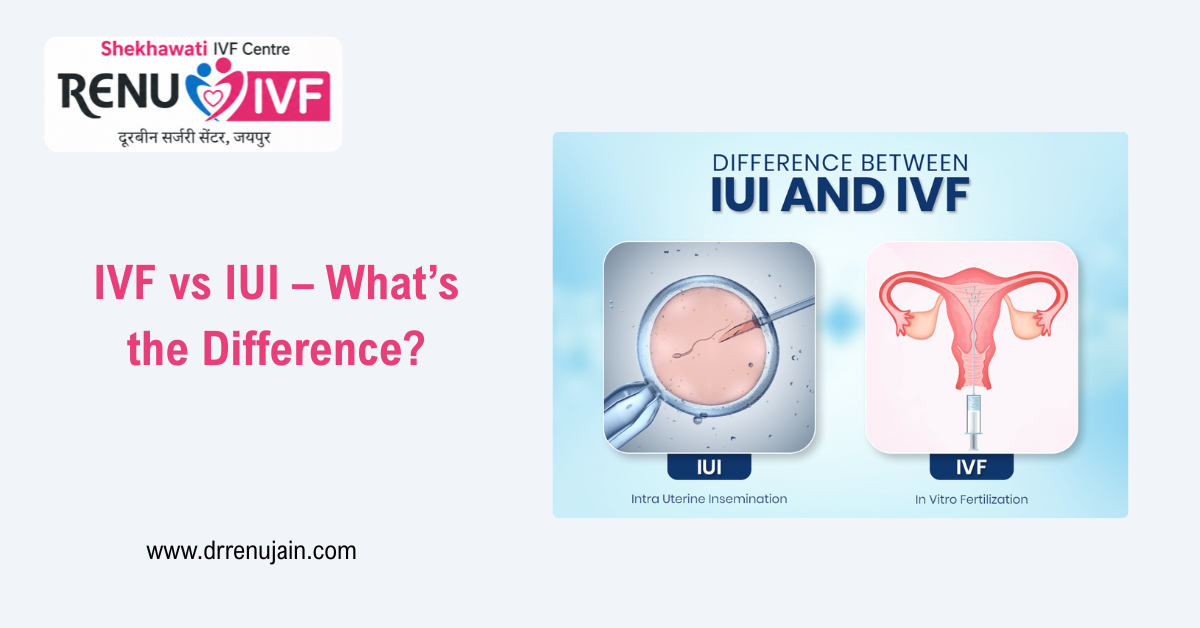

If you and your partner are on a fertility journey, you’ve probably come across two terms more than once — IVF and IUI. Both are popular fertility treatments, but they are very different in how they work, who they’re meant for, and what results they deliver.
So, what exactly is the difference between IVF vs IUI? And more importantly — which one is right for you?
Let’s break it all down in simple, easy-to-understand language.
IUI, or Intrauterine Insemination, is one of the simplest and least invasive fertility treatments available. Think of it as giving sperm a head start on its journey to the egg.
Here’s how it works:
The whole procedure takes just a few minutes and is usually painless — similar to a routine gynaecological exam. There’s no surgery, no anaesthesia, and very little recovery time.
IUI works best when:
IVF, or In Vitro Fertilisation, is a more advanced fertility treatment. Unlike IUI, fertilisation happens outside the body — in a laboratory setting.
Here’s a step-by-step look at how IVF works:
IVF is more complex, takes more time, and involves more monitoring — but it also offers higher success rates for many couples.
IVF is usually the go-to option when:
| Feature | IUI | IVF |
|---|---|---|
| Where fertilisation happens | Inside the body | Outside the body (lab) |
| Invasiveness | Minimal | Moderate (requires egg retrieval) |
| Medications required | Mild | Intensive hormone injections |
| Cost | Lower | Higher |
| Success rate per cycle | 10–20% | 40–60% (varies by age) |
| Ideal for | Mild fertility issues | Complex or severe fertility issues |
| Number of cycles needed | Often multiple | Fewer cycles needed |
| Recovery time | None | A few days rest advised |
This is one of the most common questions couples ask — and the honest answer is: IVF has significantly higher success rates than IUI per cycle.
IUI success rates typically range from 10% to 20% per cycle, depending on age and diagnosis. Most doctors recommend trying 3–6 IUI cycles before considering IVF.
IVF success rates, on the other hand, can range from 40% to 60% per cycle for women under 35, though this drops with age. Because IVF works with multiple embryos and allows doctors to select the healthiest ones, it gives fertility specialists much more control over the process.
That said, IUI is not a failure if it’s the right starting point for you. For mild fertility issues, IUI can absolutely work — and it’s a less invasive, more affordable first step.
Cost is a real consideration for many families. Here’s a general idea:
However, when you factor in the number of cycles needed, the overall cost can sometimes balance out. One successful IVF cycle may cost less in total than six unsuccessful IUI cycles.
A fertility specialist can help you understand the most cost-effective path for your specific situation.
Absolutely — and this is actually a very common approach.
Most fertility specialists follow a step-up protocol: starting with the least invasive, most affordable option (IUI) and moving to more advanced treatments (IVF) if needed. This ensures you’re not over-treated from the start, while still giving you the best possible chance of success.
The decision to move from IUI to IVF depends on:
View this post on Instagram
If you’ve been trying to conceive for 12 months without success (or 6 months if you’re over 35), it’s time to seek expert guidance. A fertility specialist will run tests to understand the underlying cause and recommend the right treatment — whether that’s IUI, IVF, or something else entirely.
Early intervention can make a significant difference in your outcomes.
If you’re in Rajasthan, consulting with the Best IVF Doctor in Murlipura Jaipur can help you get a clear diagnosis, personalised treatment plan, and compassionate support throughout your journey. Dr. Renu Jain is known for her expertise in both IUI and IVF, helping countless couples achieve their dream of parenthood.
Also Read:
The IVF vs IUI debate isn’t really a competition — they are different tools for different situations. What matters most is finding the right treatment for your body, your diagnosis, and your goals.
Here’s a quick recap:
The most important step? Talk to a qualified fertility specialist. Don’t rely on guesswork or comparisons with others — every fertility journey is unique.
With the right doctor by your side, you’re not just choosing between IUI and IVF. You’re choosing hope, science, and the best possible path to building your family.
Ready to take the next step? Book a consultation with the Best IVF Doctor in Murlipura Jaipur and get expert guidance tailored to your needs.
 Optimized by Seraphinite Accelerator